
Key takeaways
- Celiac disease is autoimmune intestinal damage confirmed by blood antibody tests and intestinal biopsy; gluten sensitivity has no diagnostic marker and produces no tissue damage.
- Both conditions require lifelong gluten avoidance, but celiac patients need supplementation for nutrient deficiencies during intestinal healing; gluten sensitivity does not.
- Brazil's abundance of cassava-based products (tapioca, polvilho, farinha de mandioca) provides affordable gluten-free staples at R$2–R$8 per kilogram.
- Celiac intestines begin healing within 3–6 months of a gluten-free diet, with full micronutrient recovery typically taking 1–2 years.
Celiac disease and gluten sensitivity sound like the same condition, but they’re fundamentally different. One is an autoimmune disorder that damages the small intestine; the other is a functional intolerance with no tissue damage. Knowing the distinction matters for diagnosis, treatment, and daily food choices. This guide breaks down what each condition is, how they differ, and how to manage them through diet.
Understanding Celiac Disease: The Autoimmune Reality
Celiac disease is an autoimmune condition triggered by consumption of gluten, a protein family found in wheat, barley, and rye. When someone with celiac ingests gluten, their immune system attacks the lining of the small intestine, damaging the villi—tiny finger-like projections that absorb nutrients. This damage is structural and progressive; it happens at the cellular level every time gluten is consumed.
The disease affects approximately 1 to 2 percent of the Brazilian population, though many cases go undiagnosed. The autoimmune response involves specific antibodies: tissue transglutaminase (tTG) and endomysial antibodies (EMA). When gluten enters the gut, these antibodies attack the intestinal lining, causing inflammation and villous atrophy. Over time, this reduces the intestine’s ability to absorb calories, proteins, fats, vitamins, and minerals.
Celiac disease is lifelong and irreversible through treatment; the only management is strict avoidance of gluten. The good news: when gluten is eliminated, the intestine begins to heal. Most people see mucosal recovery within 3 to 6 months, and complete healing typically occurs within 1 to 2 years of a strict gluten-free diet.
Gluten Sensitivity vs. Celiac Disease: Key Differences
Autoimmune vs. Functional
The core difference: celiac is autoimmune; gluten sensitivity is not. In celiac, the immune system mounts an attack against the intestinal tissue itself. In non-celiac gluten sensitivity (NCGS), people report symptoms after eating gluten—bloating, fatigue, headaches, joint pain—but blood tests for celiac antibodies are negative, and intestinal biopsies show no damage. The mechanism of NCGS remains unclear, and it may involve different pathways than celiac.
Intestinal Damage
Celiac disease causes measurable intestinal damage visible under a microscope: villous atrophy, increased intraepithelial lymphocytes, and infiltration of the lamina propria. These changes reduce nutrient absorption across the board. Gluten sensitivity produces no structural intestinal damage. People with NCGS have normal intestinal tissue when biopsied, despite subjective symptoms.
Diagnostic Markers
Celiac has clear serological markers. Blood tests detect elevated levels of tissue transglutaminase IgA (tTG-IgA) and endomysial IgA (EMA), with specificity above 95 percent. A positive blood test typically leads to upper endoscopy with small intestinal biopsy to confirm diagnosis. Gluten sensitivity has no established diagnostic biomarker. Diagnosis is made by symptom exclusion: normal celiac and wheat allergy testing, followed by empirical gluten elimination and reintroduction to observe symptom changes.

Symptoms: How to Recognize Celiac Disease
Symptoms overlap between celiac and gluten sensitivity, which makes self-diagnosis unreliable. However, celiac symptoms often include systemic signs of malabsorption that gluten sensitivity alone would not cause.
Common gastrointestinal symptoms include chronic diarrhea or constipation, bloating, abdominal pain, and greasy stools (steatorrhea, a sign of fat malabsorption). Extra-intestinal symptoms reflect nutrient deficiencies: iron-deficiency anemia (fatigue, shortness of breath), bone pain or osteoporosis (calcium and vitamin D deficiency), mouth ulcers (B12 or folate deficiency), and dermatitis herpetiformis, a distinctive blistering rash on the elbows and knees caused by gluten exposure.
Children with undiagnosed celiac often show poor growth, delayed puberty, and behavioral issues linked to nutrient malabsorption. Adults may present with infertility, peripheral neuropathy, or sudden-onset depression. Gluten sensitivity typically produces only gastrointestinal and immediate neurological symptoms (brain fog, headaches) without the organ-system complications.
Diagnosis: Blood Tests and Intestinal Biopsy
Diagnosis of celiac disease requires staying on a regular diet containing gluten. Testing while gluten-free produces false negatives because the antibodies disappear when gluten is removed.
- Step 1: Serology (Blood Test) — A physician orders tTG-IgA and total IgA levels. IgA deficiency is present in 2 to 3 percent of the celiac population, so total IgA is always checked. If tTG-IgA is positive and total IgA is normal, celiac is highly likely. EMA testing (by immunofluorescence) is more specific but less sensitive.
- Step 2: Endoscopy and Biopsy — If serology is positive, upper endoscopy is performed to visualize the duodenum and collect 4 to 6 small tissue samples. A pathologist grades the damage using the Marsh classification, with stages ranging from normal (0) to total villous atrophy (3c). Only stages 2 and 3 confirm celiac disease.
Gluten sensitivity diagnosis is empirical: eliminate gluten for 4 to 6 weeks, document symptom improvement, then reintroduce gluten under observation to confirm symptoms return. If celiac and wheat allergy testing are both negative and symptoms correlate with gluten intake, NCGS is a working diagnosis.
Managing Celiac Through Food: Safe Grains and Substitutes
A strict gluten-free diet means avoiding wheat, barley, rye, and foods containing these grains. Oats are naturally gluten-free but often cross-contaminated during processing; certified gluten-free oats are safe for most people with celiac.
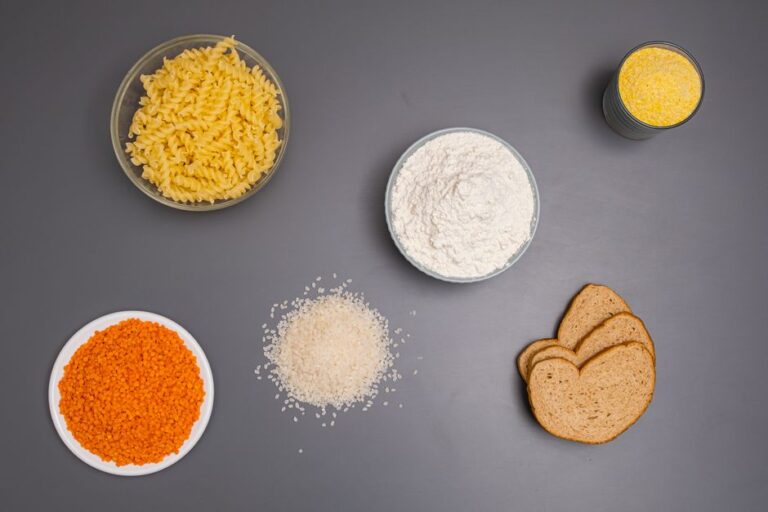
Naturally Gluten-Free Grains and Starches: Rice, corn, quinoa, amaranth, buckwheat, millet, sorghum, teff, and cassava (mandioca) are safe. In Brazil, cassava starch (polvilho), tapioca, and cassava flour (farinha de mandioca) are affordable staples—prices range from R$3 to R$8 per kilogram at supermarkets. These provide carbohydrates without gluten.
Gluten-Free Flours and Baking Mixes: Almond flour, coconut flour, chickpea flour, rice flour, and cornstarch work for baking and cooking. Brands like Nutribulk and Qualymax offer gluten-free flour blends in Brazil at approximately R$8 to R$15 per 500g. Specialty gluten-free bread brands (Zero Glúten, La Chaya, Mãe Terra) cost R$12 to R$18 per loaf—significantly more than regular bread but necessary if home baking isn’t an option.
Protein Sources: Naturally gluten-free proteins include meat, fish, eggs, legumes (beans, lentils, chickpeas), Greek yogurt, and cheese. A typical gluten-free meal might pair grilled chicken (25g protein, 0g carbs) with white rice (15g carbs, 3g protein per 100g cooked) or black beans (8g protein, 20g carbs per 100g cooked).
Gluten-Free Living in Brazil: Product Availability and Costs
Brazil has a growing gluten-free market. ANVISA (the Brazilian health regulator) requires all packaged foods to label gluten content clearly. Major supermarkets in São Paulo, Rio, and Brasília stock dedicated gluten-free sections, though smaller cities may have limited options.
Affordable gluten-free staples are abundant because cassava is a traditional Brazilian crop. Tapioca (R$2–R$4 per 500g), polvilho (R$2–R$6 per 500g), and cassava flour (R$3–R$8 per kg) are cheaper than imported gluten-free alternatives. Rice flour costs R$4–R$8 per kg. Eggs (R$8–R$12 per dozen) and beans (R$4–R$7 per kg) remain affordable protein sources year-round.
Specialized products cost more. Gluten-free pasta (brands like Barilla or Leve Levíssimo) runs R$6 to R$12 per 500g package, compared to R$2 to R$4 for regular pasta. Gluten-free snack bars and cookies range from R$8 to R$20 per unit. These are optional; most people with celiac eat naturally gluten-free whole foods and reserve processed gluten-free products for convenience.
Long-Term Health: Nutrient Absorption After Diagnosis
When the small intestine is damaged by celiac, malabsorption of nutrients is severe. Common deficiencies at diagnosis include iron (causing anemia), vitamin B12 and folate (causing macrocytic anemia and neuropathy), vitamin D and calcium (causing bone loss), and fat-soluble vitamins A, E, and K.
After starting a gluten-free diet, the intestinal lining heals, and nutrient absorption improves. However, full recovery of micronutrient stores takes time—up to 1 to 2 years for some minerals. A dietitian may recommend supplementation during the healing phase: iron (18–27 mg daily for women, depending on baseline deficiency), vitamin B12 (1000 mcg weekly or monthly injections), vitamin D (1000–4000 IU daily, adjusted by testing), and calcium (1000–1200 mg daily from food and supplement). Recheck blood work 6 months after diagnosis to guide supplementation.
People with gluten sensitivity do not have intestinal damage, so malabsorption is not a concern, and supplementation targets symptom relief rather than correcting deficiencies.
Frequently Asked Questions
What is the main difference between celiac disease and gluten sensitivity?
Celiac disease is autoimmune—your immune system attacks your small intestine when you eat gluten, causing tissue damage. Gluten sensitivity causes symptoms like bloating and fatigue, but produces no intestinal damage and no detectable antibodies.
Can you diagnose celiac disease from symptoms alone?
No. Diagnosis requires blood tests while consuming gluten regularly—specifically tests for tissue transglutaminase (tTG-IgA) and endomysial antibodies (EMA)—followed by intestinal biopsy to confirm. Stopping gluten before testing produces false negatives.
What affordable gluten-free foods can Brazilians eat?
Cassava-based staples like tapioca (R$2–R$4), polvilho (R$2–R$6), and farinha de mandioca (R$3–R$8 per kilogram) are traditional and inexpensive. Rice, beans, eggs, and meat are naturally gluten-free. Specialty gluten-free bread costs R$12–R$18 per loaf.
