
Key takeaways
- Kombucha fermentation converts sugar and tea into a low-carb beverage through Acetobacter bacteria and Saccharomyces yeast over 7–30 days.
- Residual sugar in kombucha (2–8 grams per serving) fits low-carb diets when fermented for 14+ days, offering a practical alternative to sugary drinks.
- Home-brewed kombucha costs R$ 2–5 per liter and provides complete fermentation control; commercial brands (R$ 12–25 per bottle) offer convenience but variable probiotic counts.
- While kombucha contains viable bacteria and organic acids that support digestion, clinical evidence for transformative probiotic benefits remains limited.
Kombucha is a fermented tea beverage created when sweetened black or green tea undergoes bacterial and yeast fermentation via a living culture known as SCOBY. This ancient drink, documented in Chinese medical texts around 220 BCE, has become central to functional nutrition practices including low-carb eating, intermittent fasting, and detoxification protocols. Understanding how kombucha ferments and what that fermentation produces is essential for anyone considering it as part of a health-focused diet.
What Is Kombucha?
Kombucha begins as a simple recipe: strong brewed tea, sugar, and a SCOBY (Symbiotic Culture of Bacteria and Yeast). The SCOBY is a mat of cellulose that houses Acetobacter bacteria and Saccharomyces yeast species. These microorganisms consume sugar and tea compounds, producing organic acids, carbonation, and trace amounts of B vitamins and enzymes. The result is a slightly sour, naturally fizzy beverage with a pH between 2.5 and 3.5—comparable to apple cider vinegar.
The SCOBY: Living Fermentation Culture
The SCOBY appears as a thick, rubbery disc that ranges from pale cream to tan to dark brown, depending on age and batch history. It floats on the surface of fermenting kombucha and thickens with each brew cycle. Each fermentation produces a new layer of cellulose, allowing a single SCOBY to spawn multiple “mother” cultures over years of continuous brewing. In Brazil, commercial SCOBYs are available from specialized producers like Kombucha Roots (São Paulo), Kochiba (Belo Horizonte), and online fermentation networks for approximately R$ 80–180. The SCOBY itself is not eaten; it is strained out after fermentation and reused for the next batch.
The Bacterial and Yeast Species
Kombucha’s fermentation relies on a consortium of microorganisms. The primary bacterium is Acetobacter species (often Acetobacter xylinum or Acetobacter aceti), which produces acetic acid and cellulose. The main yeast genera include Saccharomyces cerevisiae and Schizosaccharomyces species. According to a 2021 analysis in the Journal of Functional Foods, the exact microbial composition of kombucha varies between home-brewed batches and commercial products, with some commercial samples showing as few as 1,000–10,000 colony-forming units (CFUs) per milliliter, far below the 10 billion CFUs common in targeted probiotic supplements.
The Fermentation Timeline
Primary Fermentation: Days 1–3
When SCOBY is submerged in sweetened tea (typically 1 liter of strong black or green tea with 80–100 grams of sugar), fermentation begins immediately. Yeast cells activate and begin fermenting glucose into ethanol and carbon dioxide. The liquid pH, initially around 6–7, begins dropping as acids are produced. Visually, nothing dramatic occurs—the SCOBY may sink or float. Flavor is still predominantly sweet, though a faint vinegar aroma emerges.
Active Acid Production: Days 4–10
By day 4, Acetobacter bacteria accelerate, consuming ethanol produced by yeast and oxidizing it into acetic acid. The pH drops to 3–4, and sourness becomes pronounced. A new SCOBY layer, thin and gelatinous, forms on the surface as bacteria produce cellulose as a structural matrix. In Brazil’s tropical climate (Rio, São Paulo, Bahia), fermentation at room temperature (22–28°C) proceeds rapidly, typically reaching completion by day 7–10. In cooler southern regions (Santa Catarina, Paraná), the same fermentation may take 14–21 days.
Secondary Fermentation and Carbonation: Days 10–30
After removing the SCOBY and straining solids, brewers typically bottle the kombucha in sealed glass containers for 5–14 days. During this phase, residual yeast and bacteria produce CO₂ under pressure, creating carbonation. The final pH typically reaches 2.5–3.5—very acidic and shelf-stable—with residual sugar dropping to 2–8 grams per 240 ml serving, depending on total fermentation time.
Nutritional Composition and Functional Compounds
A 240 ml serving of home-fermented kombucha (14–21 day fermentation) contains approximately 30–45 calories, 2–8 grams of carbohydrate (residual sugar), and negligible protein or fat. The primary active compounds are organic acids. Acetic acid comprises 0.5–1.5% of finished kombucha and provides the characteristic sourness. Glucaric acid, another product of fermentation, is sometimes claimed to support liver detoxification pathways, though human clinical trials demonstrating this effect in kombucha remain absent; evidence stays in vitro or animal-based. Kombucha also contains trace B vitamins (B1, B2, B3, B12—amounts vary widely) and polyphenols from tea (50–100 mg equivalent to catechin), functioning as antioxidants.
Kombucha and Low-Carb Diets
For individuals tracking carbohydrate intake (low-carb, ketogenic, or fasting protocols), kombucha’s residual sugar is modest but not negligible. A well-fermented batch (21+ days) contributes 2–4 net carbohydrates per 240 ml serving. By comparison, a typical cola contains 39–40 grams of sugar per 240 ml. Kombucha fits comfortably into a 20g daily carb limit if portions are controlled. Longer fermentation reduces residual sugar further; brewers aiming for strict low-carb compatibility should ferment for 21–30 days rather than 7–10 days. The acidity of kombucha may also slow gastric emptying slightly, reducing the glycemic impact of following meals—though this effect has not been quantified in peer-reviewed studies. During intermittent fasting, a glass of kombucha after a fasting window provides organic acids that may stimulate gastric acid and digestive enzyme secretion, easing the transition to eating.
Home Brewing vs. Store-Bought Kombucha
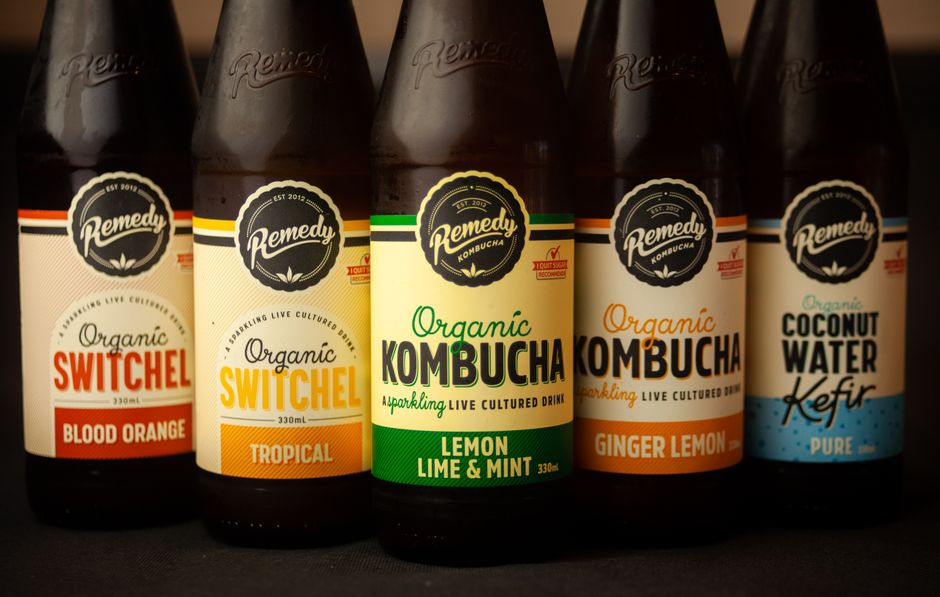
Home brewing costs approximately R$ 2–5 per liter (sugar and tea bulk rates). Store-bought ranges from R$ 12–25 per 240 ml bottle. Brands available in Brazil include Remedy Kombucha (imported, ~R$ 20–24 per bottle), Água Cola (R$ 12–18), Kamboja (São Paulo, R$ 14–20), and Kochiba (R$ 15–22). The advantage of home brewing is control: fermentation duration directly determines residual sugar and acidity. For strict low-carb or fasting applications, brewers can extend fermentation to 21–30 days, pushing residual sugar below 3 grams per serving. Commercial products target a broader palate and may retain 6–10 grams of sugar for palatability. Many are pasteurized before sale, significantly reducing viable cell counts and probiotic benefit.
Safety and Probiotic Content
Fermentation’s acidity (pH <3.5) prevents pathogenic bacteria like Clostridium botulinum and Listeria monocytogenes from surviving. However, improper sanitation or a compromised SCOBY can allow mold contamination, presenting as green, pink, or black fuzz distinct from normal SCOBY browning. Home brewers must use glass vessels, avoid metal (acidic kombucha corrodes), and maintain a healthy SCOBY starter. Regarding probiotics, kombucha contains viable bacteria and yeast, but the CFU count in home-brewed kombucha ranges from 100,000 to 1 million per milliliter, depending on fermentation conditions and storage. Unlike labeled probiotic supplements claiming 10–50 billion CFUs per serving, kombucha’s contribution to gut microbiota is modest and unquantified in most cases.
Frequently Asked Questions
How long does kombucha fermentation take?
Primary fermentation takes 7–10 days in warm climates (22–28°C) and 14–21 days in cooler regions; secondary fermentation in sealed bottles adds 5–14 days for carbonation and carbonation development.
Does fermented kombucha have less sugar than regular tea?
Yes; kombucha starts with 80–100g of added sugar but fermentation reduces residual sugar to 2–8 grams per 240 ml serving after 14–30 days, making it suitable for low-carb diets.
Can I ferment kombucha at home safely?
Yes, if you use a healthy SCOBY, glass vessels, proper sanitation, and achieve a final pH below 3.5; mold contamination (green or pink fuzz) indicates a failed batch that must be discarded.
